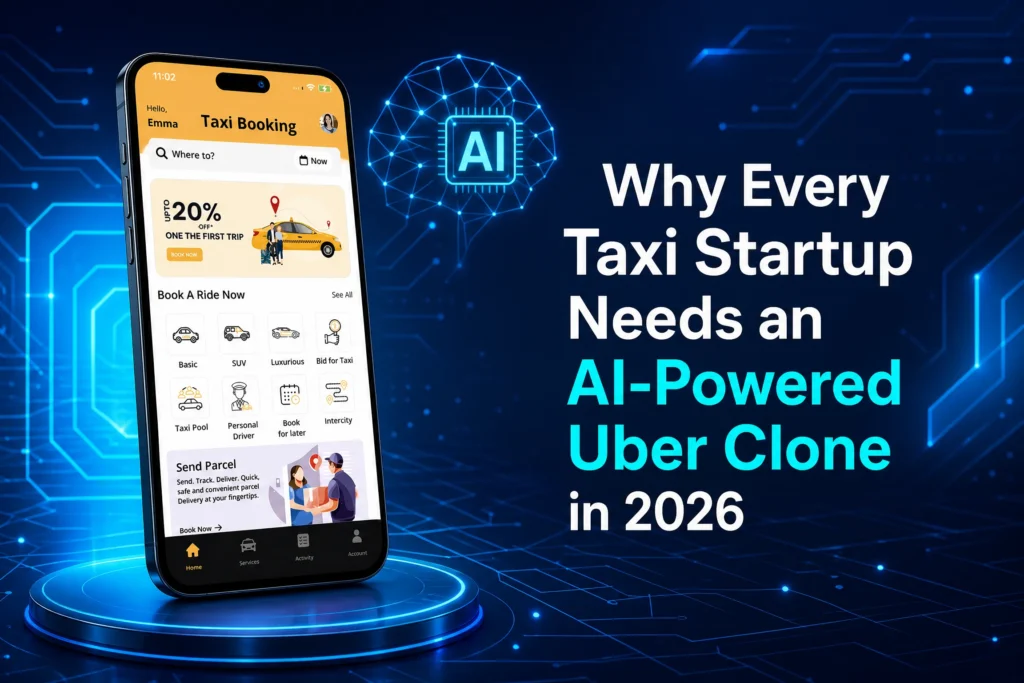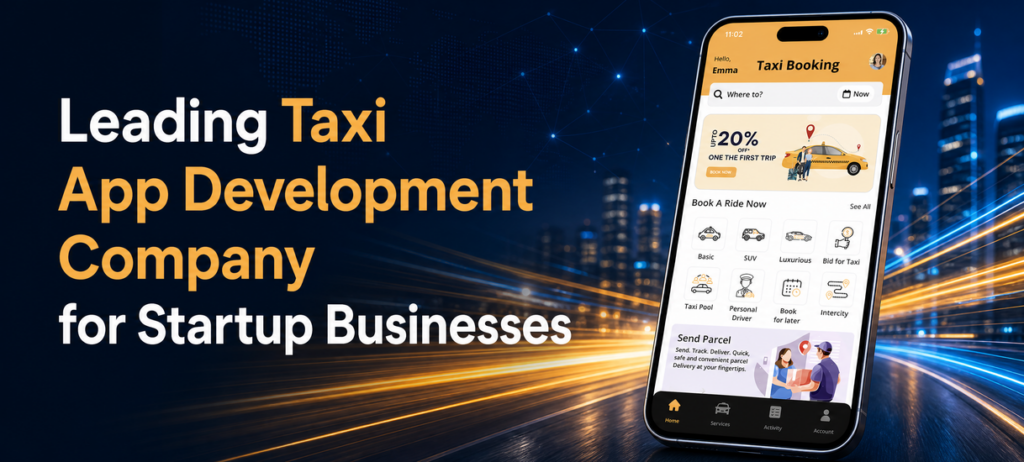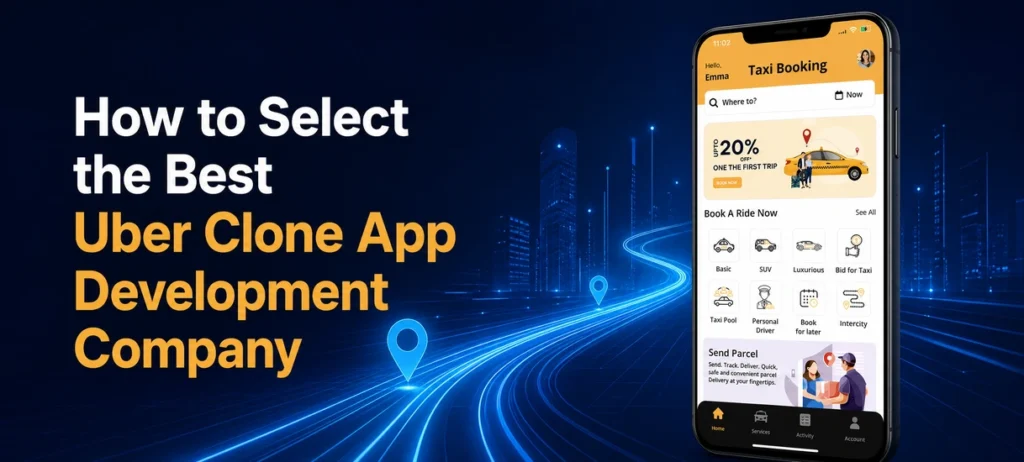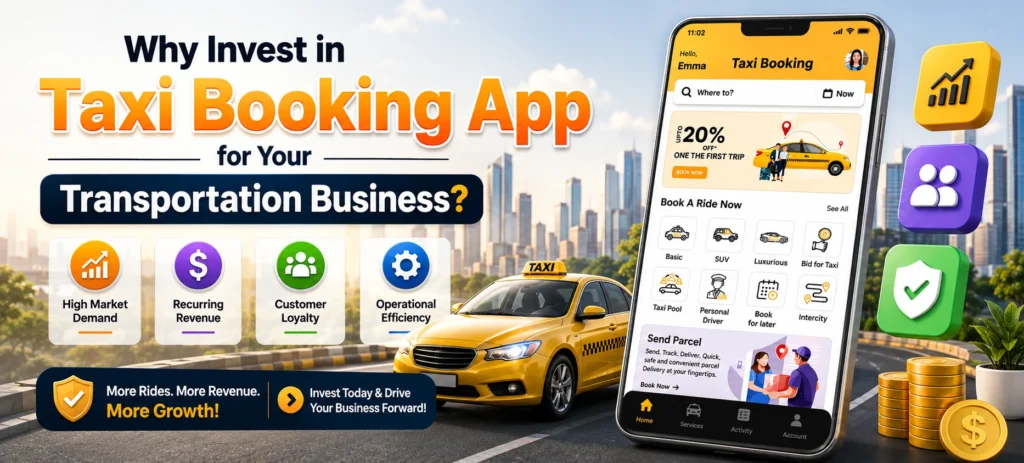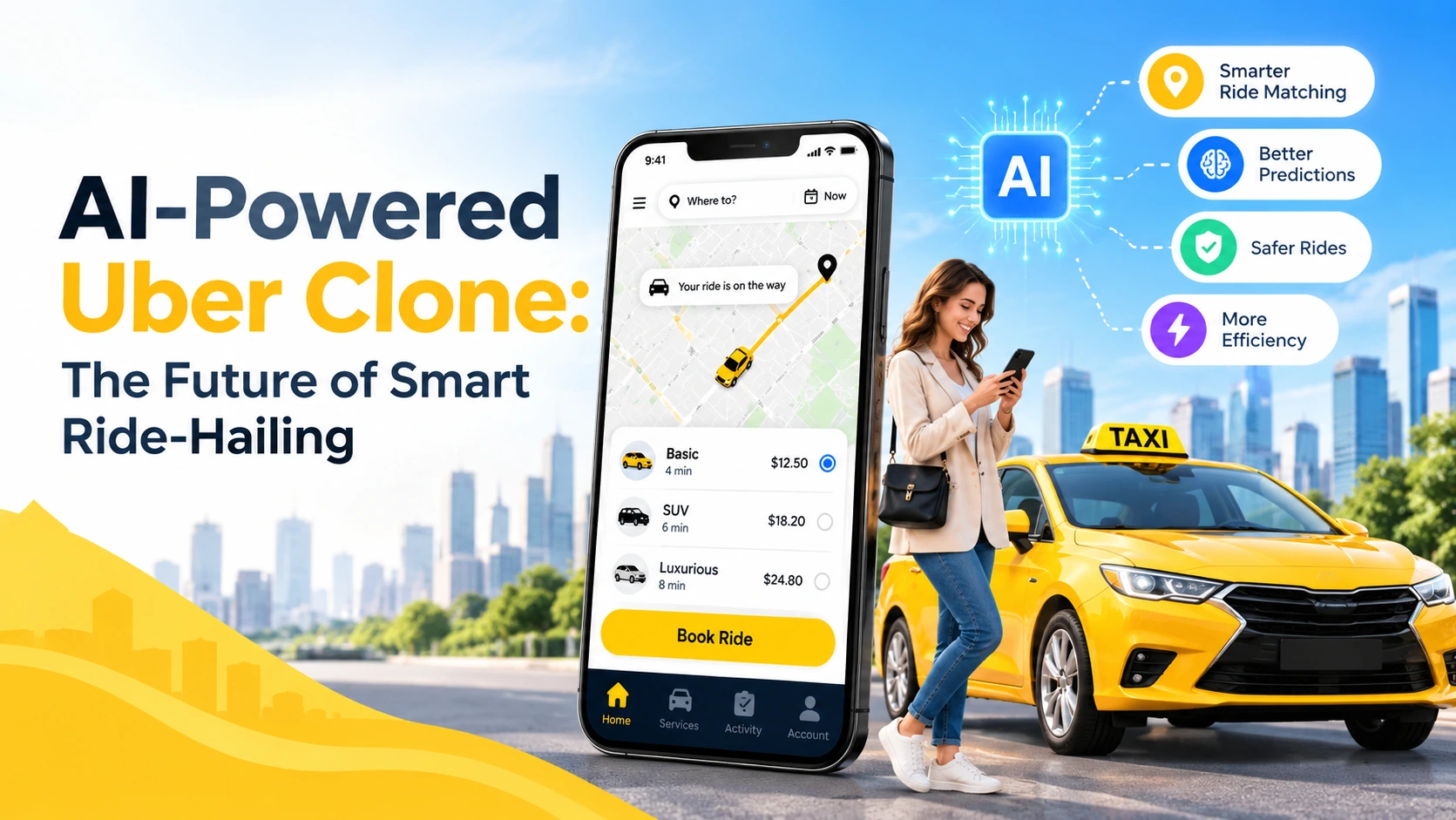
As ride-hailing industry heads towards the future, it’s growing far beyond just a ride-booking app. Today, clients want speedy reservations, right prices, efficient routes, secure trips, and a personalized experience. An AI-based Uber clone can come in handy in this situation.
When fusing the features of conventional taxi-booking with AI, businesses can create a platform that does more than just link the driver with the rider.
It can also help with automation, refinement of operations, and understanding demand for a better experience for the riders. AI can help entrepreneurs who want to seize the ride-hailing opportunities and create a modern transportation business.
What Is an AI-Powered Uber Clone?
An AI-enabled Uber clone solution offers both ready-made and fully customized applications that combine standard functions of a taxi booker with AI functionality. The solution can consist of rider apps, driver apps, an admin panel, fare management, driver management, and other must-have features.
The difference is that AI can work behind these features to make the platform smarter. This makes an AI ride-hailing app more than a simple booking application. It becomes a technology platform that helps a transportation company function in a more productive manner.
Why Is AI Becoming Important in Ride-Hailing?
Traditional ride-hailing apps mainly work according to set rules. For instance, when the user inputs a pick-up location, the system detects nearby drivers and sends booking request. While this process works, a modern platform can do much more with AI.
AI can analyze large amounts of information much faster than manual processes. It is capable of detecting booking patterns, locating crowded areas, monitoring suspicious account activity, and assisting companies in dealing with demand changes.
That is why smart ride-hailing platforms could prove useful for various businesses looking to manage their operations by making use of real-time information rather than simply guessing.
An AI-Based Dynamic Pricing?
Pricing is definitely a vital element of the ride-hailing business. If prices are too high, consumers might seek alternatives in the market. When prices are below the required level, the business may have problems getting profit or getting enough drivers on the platform.
AI solutions can be used to gather and analyze different business data regarding the booking demand, availability of drivers, peak hours, traffic conditions, weather, and any additional business-related data that can be used to help make decisions on fare pricing.
An AI-powered taxi app can utilize this information to implement pricing adjustments in accordance with the previously established rules. This will eventually allow a company to avoid constantly changing prices manually.
Smarter Driver-Rider Matching
Finding a nearby driver is only one part of successful matching. The driver that takes the least time to get to the pick-up location may not always be the right choice.
This intelligent device can take into account things like the location, the estimated time of arrival, car type, the driver’s availability, ride feature history, and business regulations to come up with the right distribution of requests.
With the help of smarter matching, intelligent ride-hailing apps can lower waiting times and maximize driver utilization. Moreover, the system can learn from experience and assist in identifying places with issues concerning request matching over time.
AI-Powered Route Optimization
Traffic and road conditions can change abruptly. An artificial intelligence system that aids with route optimization makes it possible for a driver to review location as well as traffic data and find the best route available. As a result, unnecessary travel time becomes less likely, and the overall experience gets better.
When it comes to drivers, this means trips become more effective. As for riders, a better route suggests a smoother ride and more accurate arrival time estimation.
A modern AI ride-booking platform is capable of providing routing information as part of the overall ride-booking experience instead of treating navigation just as another feature.
Demand Prediction
In the ride-hailing industry, one of the main difficulties is being aware of both when and where rides will be requested. AI can analyze historical booking information to identify recurring patterns.
It may detect that a particular area experiences higher demand during office hours, weekends, events, holidays, or other periods. This information can help businesses plan driver availability more effectively.
Rather than waiting for demand spikes to happen, operators can make use of historical information.
Thus, demand forecasting could be a useful business planning tool for smart transportation apps. It can help decide upon driver incentives, promotions, fleet distribution, and service expansion.
AI-Based Fraud and Risk Detection
When it comes to ride-hailing businesses, security is yet another field in which AI can aid businesses. A platform works with huge amounts of users, drivers, bookings, payments, and trip information. When the platform scales upwards, it becomes hard to notice anomalous activities manually.
AI-based risk monitoring can look for unusual behavior or patterns and flag accounts or activities that require attention. This can include suspicious booking patterns, unusual cancellations, repeated low ratings, or other predefined risk indicators.
V3Cube currently positions AI fraud protection as part of its taxi solution, with AI-based monitoring designed to identify potentially problematic rider and driver behavior.
Personalized Promotions and Offers
Different types of promotions resonate differently with riders. Giving the same discount to all customers means greater inefficiency in your marketing efforts, yet artificial intelligence can work on understanding customer behavior.
For example, a business may try to offer incentives to its customers who have not booked recently and offer some promotional offers at times of lower demand. This way, the promotional activities may prove to be more targeted than using generic discounts.
A smart ride-hailing platform can use these insights to support customer retention while helping businesses better understand which offers generate actual bookings.
What Can V3Cube Offer Better in This Market?
Many ride-hailing solutions provide the basic features needed to launch an app. The difference comes from how deeply AI is integrated into the complete business system.
V3Cube's current AI-powered Uber Clone combines standard rider and driver applications with AI features such as dynamic pricing, fraud detection, driver earnings assistance, automated payout reports, route optimization, AI monitoring, booking assistance, and automated promotional tools.
Another difference is the broader ecosystem around the application. Its solution includes rider apps, driver apps, web panels, fleet management, an admin panel, website booking, and support for multiple languages and currencies. It also offers both Uber-style booking and negotiation-based booking flows.
For businesses comparing solutions, these capabilities can be useful because AI is not being treated as a single feature added to the app. It is positioned across different parts of the business, from pricing and security to driver management and administration.
How Businesses Can Use AI Without Making the App Complicated?
Incorporating AI does not necessarily imply that a sophisticated technology should be installed on each of the screens. Riders should still be able to successfully launch an application, determine their destination, select the ride required, and check and track the driver for a successful trip.
The intelligence aspect must work in the background.
For example, the customer may simply see an estimated fare while AI helps calculate it behind the scenes. A driver may see recommended areas while AI analyzes demand in the background. An administrator may receive a warning while the system continuously monitors activity.
This is the right approach to building a smart transportation app: keep the customer experience simple while using technology to make the business more efficient.
The Future of AI Ride-Hailing
AI will probably become more integrated into the daily functioning of transport platforms. Future systems may be able to anticipate demand better, analyze riders’ needs, enhance the use of the fleet, spot danger, and automate standard business processes.
At the same time, AI has to complement business operations rather than replacing human control. Pricing policies, safety regulations, quality control standards, customer service, and business decisions have to be well managed.
The best platforms will most probably be those that combine the needed capabilities of AI with a simple interface, solid infrastructure, effective driver support, and a reasonable business model.
Final Thoughts
An AI-powered Uber clone can potentially provide entrepreneurs with a digital platform needed to enter the taxi business. Entrepreneurs can utilize AI technology to enhance aspects such as pricing, matching, route selection, security functions, marketing strategies, driver assistance, analytics, and daily working activities rather than developing software solely intended for bookings.
It is essential to apply AI only to those features that are capable of resolving actual business or rider issues. Implementation of AI-powered ride-hailing solutions enables smooth processes for riders, better opportunities for drivers, and more effective operations for businesses.
Employing products like V3Cube’s modern transportation app will bring together a traditional taxi app and AI-integrated services important for an up-to-date transportation process.
FAQs
What is an AI-powered Uber clone?
An AI-powered Uber clone is a ride-hailing solution that combines standard booking features along with some capabilities derived from AI, including smart matching, variable pricing, demand prediction, fraud detection, and route planning.
How can AI improve a ride-hailing business?
AI can help businesses understand demand, enhance driver allocation, automate repetitive jobs, discover suspicious behavior, and improve rider and driver experiences.
Can an AI ride-hailing app support different types of transportation?
Certainly. An AI ride-hailing app can be adapted to implement features such as taxis, private vehicles, rentals, corporate trips, airport transfers, or any other type of transport according to the needs of the business.
How does AI help drivers in a taxi app?
AI allows drivers to find areas with high demand, develop routes, monitor earnings, and receive useful information regarding trips.
Can businesses customize an AI-powered taxi app?
Indeed. Companies can alter features, rules for pricing, booking methods, means of payment, categories of services, and a lot more to meet their needs.